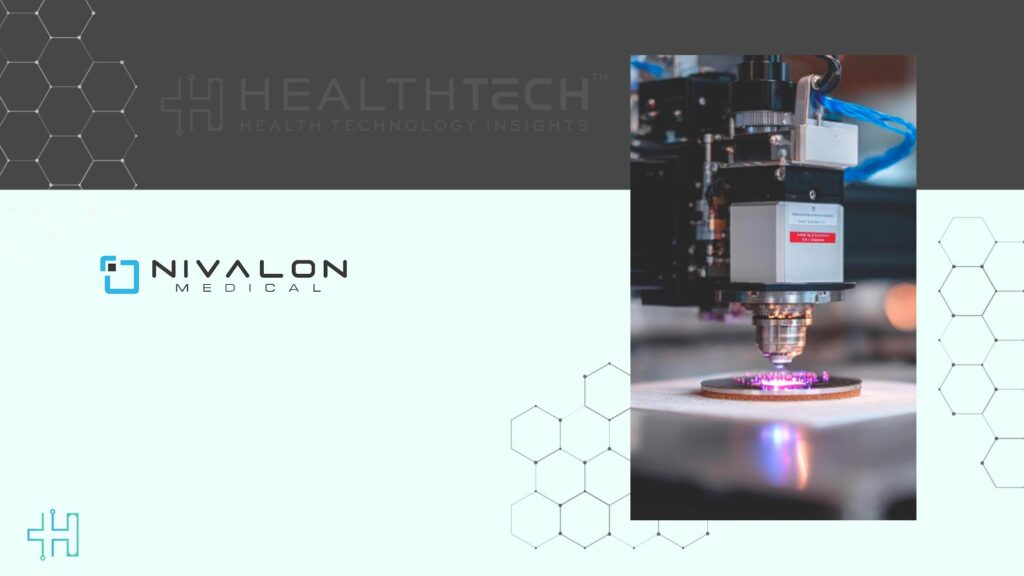
Nivalon Medical Technologies Inc. has created the world’s first fully patient-specific spinal implant that preserves natural motion and contains no metal, using AI-driven design and advanced ceramic 3D printing. The device features a proprietary zirconia-toughened alumina ceramic structure that mimics bone combined with a flexible elastomeric core to replicate natural spinal movement. This innovation establishes a new class of spinal implant designed to match human anatomy and biomechanics precisely.
Health Technology Insights: FuturHealth Adds Wegovy Pill to Its Wellness Solutions
Unlike conventional implants, which come in fixed sizes and are made from metal alloys, Nivalon’s implant is digitally designed from each patient’s CT data and 3D printed to fit their unique spinal anatomy. The resulting ceramic structure eliminates metal-related complications such as corrosion, ion release, stiffness mismatch, and interference with imaging while preserving natural spinal mobility. First-in-human procedures are planned for 2026, with Nivalon Co-Founder and CEO Todd Hodrinsky among the initial recipients.
The EvoFlex platform has undergone extensive independent testing to validate its performance. At the University of South Florida, the implants were evaluated under six degrees of freedom motion and physiologic loading, showing stiffness curves and motion profiles that closely replicate native spinal function. At the University of Connecticut Institute of Materials Science, compression and shear testing confirmed that the ceramic-polymer structure can withstand compressive loads up to 14.6 kN and maintain interface integrity under extreme forces. Simulated body fluid immersion and SEM-EDX analysis further demonstrated the ceramic’s bone-like surface, its ability to support mineral deposition, and its potential for long-term osseointegration.
Preoperative and postoperative cadaver studies verified the accuracy of Nivalon’s digital design platform. In complex four-level reconstructions, the system accurately repositioned vertebrae, restored sagittal balance, and aligned facet joints, demonstrating its ability to replicate anatomy with precision.
Health Technology Insights: Study Confirms AISAP AI Can Detect Heart Disease from Ultrasound
This achievement was made possible through collaboration with the Youngstown Business Incubator and its Advanced Manufacturing and Engine Tech programs. Using XJet’s NanoParticle Jetting ceramic 3D printing technology, Nivalon developed a fully ceramic, load-bearing spinal implant that can be produced reliably and at scale. SEM analysis confirmed the printed zirconia-toughened alumina ceramic forms a distinct and biocompatible microstructure, marking a medical industry first.
Todd Hodrinsky, CEO and co-founder, said, “The problem was not with surgeons but with the implants. Traditional metal hardware was never designed to act like bone or replicate natural spinal motion. We knew we could engineer something fundamentally better.” Hodrinsky and co-founder Marcel Janse started with a personal mission that has evolved into a transformative approach to spinal care, replacing rigid metal implants with patient-specific, motion-preserving ceramic devices.
The EvoFlex platform combines patient-specific ceramic endplates, a flexible elastomeric core, full MRI and CT compatibility, and a surgeon-controlled digital workflow, creating the first fully ceramic, patient-specific spinal implant system. Nivalon holds two U.S. patents with six additional patents pending and is preparing for NIH Phase II SBIR funding, FDA PMA trials, and first-in-human procedures in 2026. Hodrinsky and Janse emphasized, “This is more than a technical achievement; it is personal. The endplates for my own spine are complete. This innovation can transform lives by restoring normal function and reducing chronic complications.”
Health Technology Insights: Genentech Reports Positive Phase II Results for Obesity Drug CT-388
To participate in our interviews, please write to our HealthTech Media Room at info@intentamplify.com