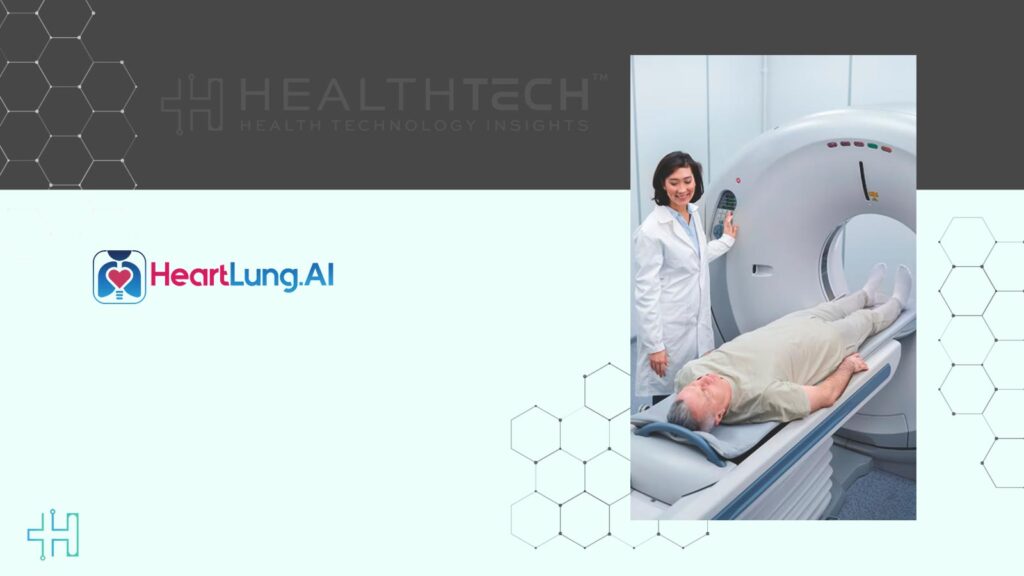
HeartLung Corporation announced that the U.S. Food and Drug Administration has granted clearance for AI-CVD, its leading AI-based quantitative imaging platform, under 510(k) K252029. This milestone marks a significant advance in preventive medicine by allowing routine CT scans to be used for early disease detection without additional tests, radiation, contrast agents, or workflow disruption.
With this FDA clearance, AI-CVD becomes the most complete opportunistic screening tool approved for CT imaging in the United States. It can automatically extract a wide range of clinically important cardiovascular and systemic measurements from existing chest and abdominal CT scans. The platform has the potential to analyze nearly 40 million CT scans performed annually in the U.S., which represents roughly half of all CT imaging, and up to 80 million scans when including head and extremity scans. By turning existing diagnostic imaging into a scalable early detection system, AI-CVD aims to identify disease before symptoms appear.
AI-CVD is designed as an opportunistic, AI-driven imaging solution that generates quantitative measurements from CT scans for clinical evaluation. The tool enables healthcare providers to detect patients who may be unaware of their risk for conditions including coronary heart disease, heart failure, atrial fibrillation, stroke, osteoporosis, liver steatosis, diabetes, and other health issues that might require follow-up.
The platform integrates ten FDA-cleared measurement modules. These include coronary artery calcium scoring, aortic wall and valve calcium assessment, mitral valve calcium evaluation, cardiac chamber volumetry, epicardial fat analysis, aorta and pulmonary artery sizing, lung and liver attenuation measurements, and bone mineral density and muscle-fat composition assessment. All volumetric values are normalized to body surface area and reported in absolute terms as well as population-based percentiles based on data from the Multi-Ethnic Study of Atherosclerosis and the Framingham Heart Study.
“For decades, medical practice has waited for patients to present symptoms before identifying disease. AI-CVD allows us to uncover conditions while they remain silent by using scans that are already available,” said Dr. Morteza Naghavi, Founder and President of HeartLung Corporation. “This FDA clearance transforms CT imaging from a purely diagnostic tool into a preventative platform capable of assessing risk across the heart, lungs, liver, bones, and metabolic system in a single scan.”
Health Technology Insights: Hyperfine Announces Regulatory Approval of the Swoop System in India
The platform offers an opportunity to address one of the most persistent gaps in healthcare by uncovering silent disease before irreversible events occur. Members of HeartLung’s Scientific Advisory Board highlighted the scientific foundation behind AI-CVD. Dr. Arthur Agatston, Clinical Professor of Medicine at Florida International University and creator of the Agatston Coronary Calcium Score, noted that coronary calcium has long shown that atherosclerosis begins long before symptoms appear. AI-CVD allows clinicians to identify patients at risk using scans that already exist.
From a radiology perspective, Dr. David Yankelevitz, Professor of Radiology at the Icahn School of Medicine at Mount Sinai, emphasized that modern CT imaging contains far more useful information than is typically extracted. He explained that AI-CVD enables clinicians to leverage routine scans efficiently without adding extra imaging, which represents a practical model for opportunistic screening. Dr. Zahi Fayad, Professor of Radiology and Medicine and Director of the BioMedical Engineering and Imaging Institute at Mount Sinai, added that cardiovascular disease is rarely isolated. By providing quantitative measurements across the heart, vasculature, lungs, liver, bones, and body composition, AI-CVD establishes a framework to identify patients who could benefit from more comprehensive evaluation.
Health Technology Insights: Rona Launches First Bi-valent PCSK9-LPA siRNA for Heart Risk
Dr. Robert Kloner, Director of the Cardiovascular Research Institute at Huntington Medical Research Institutes and Professor of Medicine at the Keck School of Medicine of USC, highlighted the clinical significance of early detection. He stated that many cardiovascular and metabolic conditions progress silently over years, and AI-CVD can identify structural abnormalities that might otherwise go unnoticed, enabling timely intervention and informed care decisions.
Traditional primary prevention relies heavily on population-based risk scores, which often fail to identify patients with significant subclinical disease. Quantitative CT imaging through AI-CVD allows clinicians to detect structural and calcific disease directly rather than inferring risk indirectly. Dr. Nathan D. Wong, Professor of Medicine and Director of the Heart Disease Prevention Program at the University of California, Irvine, explained that primary prevention has long depended on indirect risk assessments, yet events still occur in patients classified as low risk. He emphasized that AI-CVD provides a scalable, FDA-cleared method to integrate objective CT-based phenotypes into preventive care.
Unlike conventional screening programs that require dedicated exams and complex referral systems, AI-CVD works opportunistically with scans performed for other reasons, including lung cancer screening CT, coronary calcium scans, diagnostic chest CT, coronary CT angiography, CT pulmonary angiography, and abdominal or pelvic CT. By utilizing existing imaging, AI-CVD transforms routine scans into a comprehensive prevention platform that can identify silent disease early.
This FDA clearance gives HeartLung authorization for ten opportunistic screening indications within a single AI platform. As healthcare increasingly focuses on early detection, value-based care, and cost efficiency, AI-CVD provides a cleared pathway to maximize the clinical value of existing CT scans without increasing the burden on patients or healthcare providers.
Health Technology Insights: Wealth Enhancement to Acquire Wealth Advocates with $476 Million AUM
To participate in our interviews, please write to our HealthTech Media Room at info@intentamplify.com